Everything about film reels, projectors, and film preservation
The best way to scan film negatives depends on your collection, budget, and the quality you want. Compare DIY methods with professional scanning, learn which option works best for 35mm, 110, APS, and medium format film, and see when Capture provides the best results.
Old film turns pink or magenta because color film contains three dye layers — cyan, magenta, and yellow — and the cyan and yellow layers break down much faster than the magenta layer. As those two dyes fade, magenta becomes dominant, giving the footage its characteristic pink or red cast. This is called color dye fading, particularly Eastmancolor stocks manufactured before Kodak introduced low-fade film stocks in the early 1980s.. The effect is permanent and progressive, but much of the original color can still be recovered digitally if the film is scanned before fading becomes too severe.
The most reliable way to view 8mm film without a projector is professional digitization, which converts each frame into a digital file watchable on any device. Smartphone apps and DIY lightbox setups exist but cannot replicate motion or deliver consistent results. Professional scanning is the only method that produces watchable footage.
An 8mm film projector works by advancing film frame by frame in front of a bright lamp, creating motion on a screen at 16–18 frames per second. Most vintage 8mm projectors used a reel-to-reel design where film threaded manually through the gate. These projectors are no longer manufactured, and working units require regular maintenance — making digitization a more practical way to view 8mm footage today.
The best 8mm film cameras are vintage models: the Canon 514XL-S, Nizo 801 Macro, and Beaulieu 4008 ZM II for Super 8, and the Bolex H-8 or Kodak Brownie for standard 8mm. Prices range from about $25 for a simple Brownie to $1,200 or more for a pro-grade Beaulieu. Because 8mm cameras are no longer mass-produced, most are bought used from camera shops, resellers, and online marketplaces.
The scariest classic films still hold up decades later: Psycho, Rosemary's Baby, The Exorcist, Jaws, The Shining, Halloween, Alien, Poltergeist, A Nightmare on Elm Street, and The Silence of the Lambs. Most were first watched on VHS in living rooms, a format that somehow made them feel even more unsettling than a theater.
Standard 8mm and Super 8 are not interchangeable — Super 8 has smaller sprocket holes and a larger frame area, delivering about 50% more image space and sharper picture quality despite using the same film width. Super 8 also introduced cartridge loading, making it far easier to use than the double-run threading required by standard 8mm cameras. Both formats are still actively digitized today.
Film formats evolved from 35mm cinema stock to narrower consumer formats: 16mm in 1923, standard 8mm in 1932, and Super 8 in 1965 with its simpler cartridge loading. Each step made cameras smaller and more affordable before video tape replaced film for home use in the 1980s.
Properly stored photographic film can last 50 to 100 years before significant deterioration, though nitrate film from before the 1950s is chemically unstable and degrades faster. Color film fades more quickly than black and white. Digitizing remains the safest long-term preservation method regardless of storage conditions.
The first public film screening took place in Paris in 1895, courtesy of the Lumière brothers. Early films were silent, hand-tinted frame by frame for color, and ran only a few minutes. The first feature-length film is generally credited to the 1906 Australian production The Story of the Kelly Gang. Home movie cameras brought filmmaking into ordinary households by the 1930s, creating a parallel private history of the 20th century.
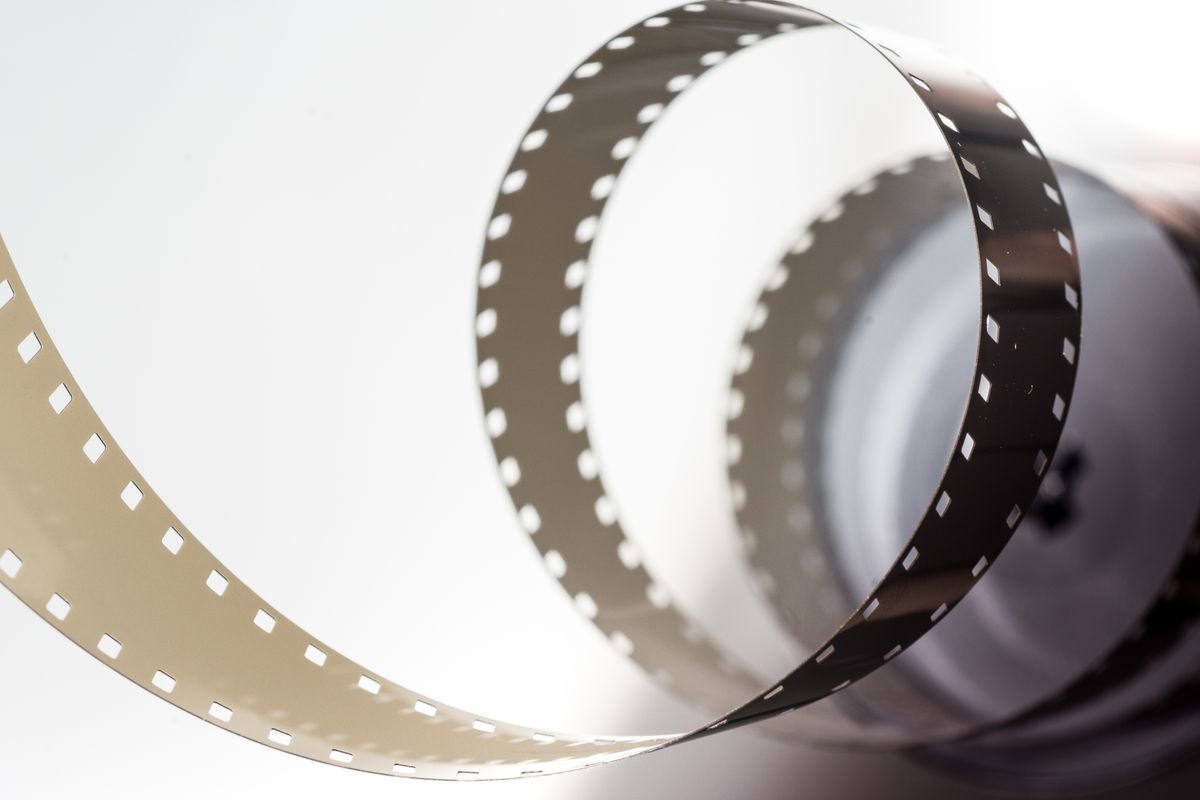
Old movie reels are spools of photographic film containing a sequence of frames that create motion when projected at the correct speed. Home movie reels typically ran on 8mm or Super 8 film, while professional and educational reels used 16mm. Many old reels are stored in metal or plastic canisters and have never been digitized, making them among the most commonly recovered and most fragile items in family collections.
Super 8 film is a motion-picture film format Kodak introduced in 1965. It uses 8mm-wide film loaded in an easy, daylight-loading cartridge, with smaller sprocket holes than regular 8mm that leave room for a larger image — and therefore a sharper picture. Super 8 became the most popular home-movie format from the late 1960s through the early 1980s, and Kodak still manufactures it today.
The only practical way to view 16mm film without a projector is to have it digitized by a professional service, which scans each frame and outputs the footage as a digital video file viewable on any screen. Holding reels up to light shows individual frames but gives no sense of motion or sound. DIY telecine setups exist but require significant equipment and produce inconsistent results compared to professional scanning.
Creating a film reel today typically means digitizing existing footage and editing it into a highlight compilation, or shooting on analog film using a Super 8 or 16mm camera and having it processed at a film lab. For home movie preservation purposes, a film reel usually refers to organizing scanned footage into a single edited video. Services like Capture digitize the raw reels and deliver the files for editing.
A film reel is a circular spool that holds a strip of motion-picture film, used to store and project movies before digital formats took over. Most home movie reels are 8mm, Super 8, or 16mm film, and if you've found one in a box at home, it likely holds family footage from the 1920s through the 1980s.
Undeveloped film should be stored in a cool, dry, dark environment — ideally a refrigerator at 55°F or below, sealed in an airtight container to prevent moisture damage. Developed film reels should be kept in archival-quality canisters away from heat and humidity. Both undeveloped and developed film degrade faster when exposed to light, heat, or fluctuating temperatures.
Film projectors work by shining light through a moving strip of film — advancing frame by frame at 16 to 24 frames per second — to project a sequence of images that creates the illusion of motion. The history stretches from Eadweard Muybridge's Zoopraxiscope in 1879 to the Super 8 home projectors of the 1960s and 70s, with vintage models still available today through eBay and estate sales.
You can get film developed by doing it yourself at home with a darkroom kit, dropping it off at a local camera shop, mailing it to an online film lab, or sending it to a professional digitization service. Online labs accept most film types and offer professional results at competitive prices without requiring any equipment on your end.
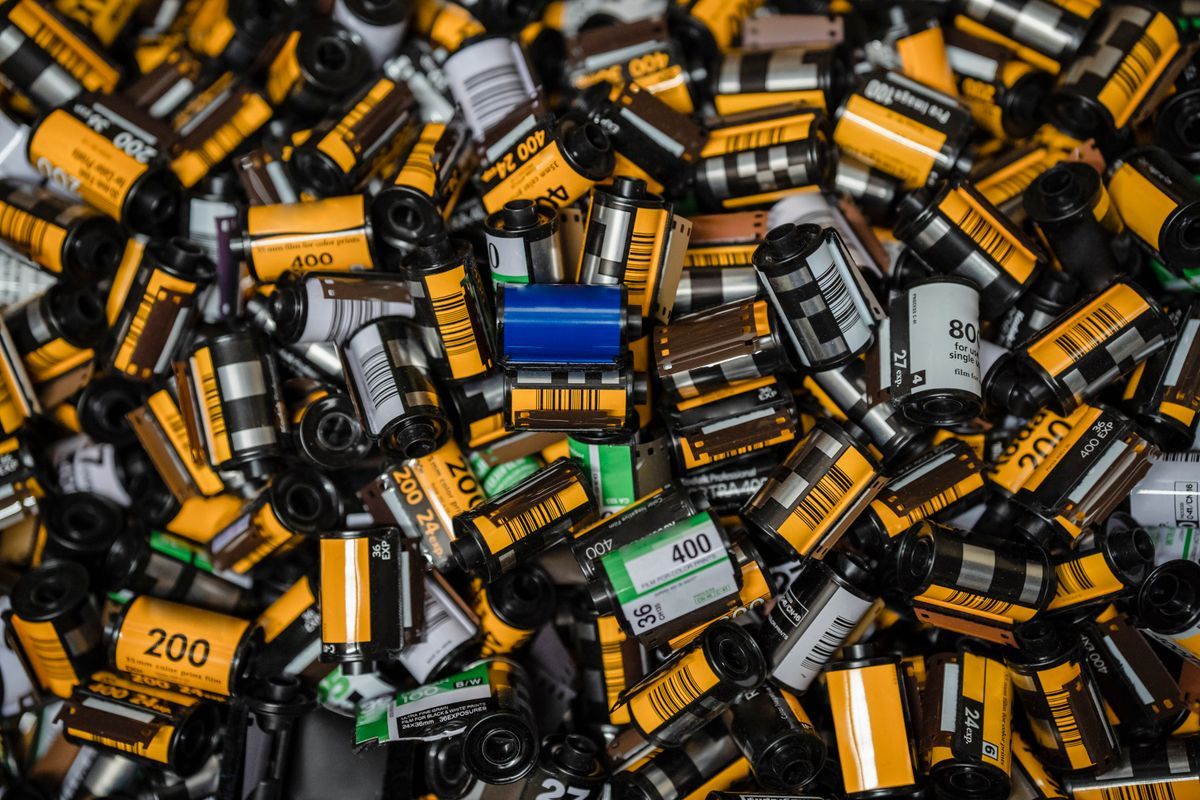
Negative film records an inverted image where light areas appear dark and colors are reversed, which is then corrected during printing or scanning to produce a true-to-life photo. It's the most common photographic film type and typically holds more original image detail than the printed photos made from it.