Why Is My Old Film Pink? Causes, Restoration, and Preservation Tips
Old film turns pink or magenta because color film contains three dye layers — cyan, magenta, and yellow — and the cyan and yellow layers break down much faster than the magenta layer. As those two dyes fade, magenta becomes dominant, giving the footage its characteristic pink or red cast. This is called color dye fading, particularly Eastmancolor stocks manufactured before Kodak introduced low-fade film stocks in the early 1980s.. The effect is permanent and progressive, but much of the original color can still be recovered digitally if the film is scanned before fading becomes too severe.

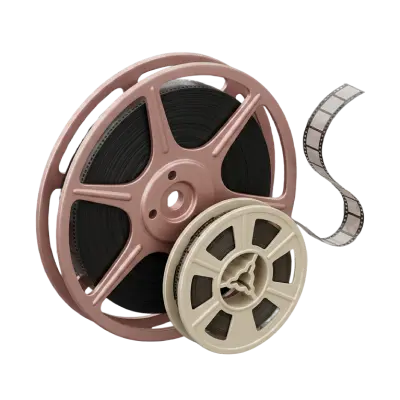
You pull a box of old film reels from the attic expecting to see the home movies you remember — summer vacations, birthday parties, faces you have not seen in decades. Instead, the footage looks pink, red, or washed in magenta. Everything is tinted the wrong color. If that sounds familiar, you are not looking at mold, water damage, or a bad projector. What you are seeing is color dye fading — a chemical process that affects the vast majority of color home movie film shot between the 1950s and early 1980s. The film is not necessarily ruined, and in many cases, the underlying image can still be recovered digitally. But understanding what caused the color shift, and acting before it gets worse, makes all the difference.
Why Does Old Film Turn Pink?
Color film is not a single layer. It is a carefully engineered stack of three separate dye layers, each responsible for recording a different part of the color spectrum:
• Cyan dye — records red wavelengths of light
• Magenta dye — records green wavelengths
• Yellow dye — records blue wavelengths
Together, these three dye layers combine to reproduce the full range of colors you see on screen. The problem is that they do not age at the same rate. Cyan dye is the most chemically unstable — it begins to break down within years of manufacture. Yellow follows. Magenta, by comparison, is far more stable and persists long after the other two have significantly faded.
The result is a film that looks overwhelmingly pink or magenta — not because any pink dye was added, but because the other two colors have disappeared and left only the most stable one behind.
Heat and humidity accelerate the process considerably. Ultraviolet light and repeated projection can also accelerate dye fading over time. Film stored in an attic, garage, or basement — where temperatures swing dramatically — will show fading years or even decades earlier than film kept in a cool, stable environment.
Which Film Types Are Most Likely to Fade?
Not all film fades equally. The era the film was manufactured, the stock used, and how it has been stored all affect how far the pink shift has progressed.
Film Type | Era | Fading Risk | Typical Color Shift |
Standard 8mm (Eastmancolor) | 1950s–1970s | Very High | Pink to deep magenta |
Super 8 (Eastmancolor) | 1965–1982 | Very High | Pink, red, or magenta |
16mm (Eastmancolor prints) | 1950s–1980s | Very High | Magenta dominant |
Super 8 (Ektachrome reversal) | 1965–onward | Medium | Blue shift or minimal fading |
Kodachrome (reversal) | Any era | Low | Very stable; colors largely intact |
The most common home movie formats — Super 8 film and standard 8mm — were almost exclusively printed on Eastmancolor stock through the late 1970s. If your reels are from this period, the pink cast you are seeing is almost certainly Eastmancolor dye fading. Not sure which format you have? The differences between 8mm and Super 8 film come down to sprocket hole size and frame dimensions — both visible to the naked eye.
The Kodachrome Exception
If you have home movies that still look vibrant and full of color despite being decades old, there is a good chance they were shot on Kodachrome. Unlike chromogenic films such as Eastmancolor, Kodachrome used a different dye-coupling process that produced exceptionally stable colors. Kodachrome home movies from the 1950s and 1960s regularly survive in near-original condition today.
Ektachrome is generally more color stable than early Eastmancolor and often develops cooler blue-green shifts rather than the strong magenta cast associated with Eastmancolor.If your Super 8 reels look greenish or blue-shifted rather than pink, they are likely Ektachrome rather than Eastmancolor.
One quick way to check: if your color home movies from before 1982 still look reasonably accurate, they were likely shot on Kodachrome or another highly stable reversal film. If they look pink, they were almost certainly not.
Color Fading vs. Vinegar Syndrome
People sometimes confuse color dye fading with another common film deterioration problem: vinegar syndrome. They are related — both can happen to the same reel — but they are caused by different chemical processes and have different consequences.
| Color Dye Fading | Vinegar Syndrome |
What it is | Breakdown of chromogenic dye layers | Breakdown of the acetate film base |
Visible sign | Pink, red, or magenta color cast | Warping, brittleness, white powder residue |
Smell | No distinctive smell | Strong vinegar or sour odor when can is opened |
Reversible? | No — but color can be partially recovered digitally | No — but digitization can save the images |
Affects image? | Yes — colors shift permanently | Yes — can cause distortion, shrinkage, and image loss |
Treatment | Digitize and apply color correction | Digitize immediately; limit handling |
Both problems share one important characteristic: neither can be reversed. What you can do is preserve the images that remain. If your reel smells sour, that is vinegar syndrome — a separate but related form of film decay — and it means digitization should happen as soon as possible.
Can Faded Film Be Restored?
The honest answer is: it depends on how far the fading has progressed.
Color film fading is a one-way process. Once a dye layer is gone, it cannot be chemically restored. However, digital color correction can achieve impressive results when some trace of the original dye layers remains — which is the case for most reels that still have a visible image.
Here is what is realistic to expect:
• Early to moderate fading (film looks pink but details are clear): Professional color correction can recover a significant portion of the original color palette. Skin tones, blues, and greens can often be pulled back convincingly.
• Severe fading (film is deep red or almost uniformly magenta): Some color correction is still possible, but the result may look muted or slightly artificial. The image details are preserved — the color accuracy is limited.
• Complete dye loss (film appears uniformly magenta with no visible detail): Conversion to black and white may produce a cleaner, more watchable result than attempting full color restoration.
The critical factor is timing. Film that is just beginning to shift still has the most cyan and yellow dye remaining — and therefore the most color to recover. Every year of continued storage means more dye loss and a harder correction job.
Professional digitization services apply color correction at the point of scanning, which is the most effective stage. Adjustments made frame-by-frame during high-resolution capture preserve detail that post-processing alone cannot recover.
How to Slow Down Film Color Fading
If your film is already pink, you cannot reverse the existing fading — but you can stop it from getting worse. The dye breakdown is a chemical reaction, and like all chemical reactions, it slows dramatically with lower temperatures and lower humidity.
Temperature swings are the biggest driver of accelerated fading — which is why the worst place to keep film is an attic or garage. The right approach to how to store film comes down to three variables: temperature, humidity, and container type. The short version:
• Temperature: Keep film below 65°F (18°C) if possible. Cold storage below 40°F dramatically extends dye life. Standard household refrigerators work well for small collections if the film is properly sealed.
• Humidity: Maintain between 30% and 50% relative humidity. High humidity accelerates both color fading and vinegar syndrome. Low humidity below 20% can cause brittleness.
• Light: Keep film in opaque containers and away from sunlight and UV exposure at all times.
• Containers: Use ventilated, acid-free film cans or archival polypropylene cases. Avoid sealed plastic bags or airtight containers — trapped acetic acid vapors from the film itself will accelerate deterioration.
• Projection: Do not project already-faded film. The heat from projector bulbs accelerates dye breakdown, and older projectors can physically damage brittle film.
• Separation: If any reel smells of vinegar, store it away from your other reels immediately. Acetic acid vapors from deteriorating film can accelerate damage in adjacent canisters.
These steps buy time, but they are not a permanent solution. The most thorough approach to preserving film reels long-term is digitization — the only way to protect the images completely, regardless of what happens to the physical reel.
When Should You Digitize Faded Film?
The straightforward answer is: now, not later.
Digitizing faded film does not reverse the color shift, but it captures everything that remains on the film at this exact moment. Every additional year of storage — even in ideal conditions — means slightly more dye degradation and a slightly harder color correction job.
Color correction applied during professional scanning is significantly more effective than correction attempted on a low-quality scan afterward. This is because high-resolution frame-by-frame scanning captures subtle tonal information that lower-quality processes discard. That information is what makes the difference between a convincing color restoration and one that looks flat or artificial.
Sending your reels to a professional film digitization service means your 8mm, Super 8, and 16mm reels are handled in any condition — including film that has already begun to fade.
Capture includes complimentary cleaning and splice repair, with color correction applied whenever the remaining image information allows meaningful restoration. If your reels show any pink or magenta cast, they have already started the process that cannot be reversed on the film itself. But they almost certainly still have image information worth saving — and the sooner that image is captured digitally, the more of it can be recovered.
Frequently Asked Questions
Why is my old film red instead of pink?
Both effects have the same root cause — color dye fading — but the specific appearance depends on how far the process has progressed and which dyes remain. Deep red often indicates more advanced fading, where the cyan and yellow layers have nearly completely degraded, leaving only the magenta layer. Slightly less faded film tends to look pink rather than red.
Can faded film be restored to its original colors?
Not physically — once a dye layer is lost, it cannot be chemically recovered. However, professional digital color correction can reconstruct a significant portion of the original color palette when some dye information remains on the film. Results depend on the severity of fading: moderately pink film usually corrects well; severely red or magenta film may require conversion to black and white for the best result.
Which film types are most likely to turn pink?
Film printed on Kodak Eastmancolor stock — which includes most commercial and home movie prints from approximately 1950 to 1982 — is the primary culprit. This covers the majority of standard 8mm and Super 8 home movies from that era. Kodachrome and Ektachrome reversal films are significantly more stable and rarely show the same magenta shift.
Does Kodachrome film fade?
Kodachrome fades at a dramatically slower rate than Eastmancolor. Home movies shot on Kodachrome in the 1950s and 1960s are often still richly colored today. Kodachrome's dye-coupling process produces much more stable dyes than the chromogenic process used in Eastmancolor prints, which is why so much archival and documentary footage from that era still looks vivid.
What is the difference between color fading and vinegar syndrome?
Color fading affects the dye layers and causes the pink or magenta cast. Vinegar syndrome affects the acetate film base and causes warping, brittleness, and a sour vinegar smell. Both are irreversible and often occur together in older film. Color fading can be partially corrected digitally; vinegar syndrome cannot be reversed but can be slowed with proper storage. If your film smells strongly of vinegar, digitize it as soon as possible.
Is it worth digitizing film that is already pink or faded?
In almost every case, yes. Even significantly faded film typically retains image detail that can be recovered through color correction during scanning. The alternative is doing nothing while the fading continues — meaning less color information will be available in the future. Unless the film has completely lost all image detail, digitization is worth it.
How should I store film reels to prevent further fading?
Keep film in a cool (below 65°F), dry (30–50% relative humidity), dark environment. Use ventilated, acid-free containers — not sealed plastic bags or airtight canisters. Never store film in attics, garages, or basements where temperature and humidity fluctuate. Do not project faded film. If any reel smells of vinegar, store it separately from your other reels.
How long does 8mm film last before it fades?
Eastmancolor-based film stored at room temperature in a typical household typically begins showing noticeable color shift within 15 to 25 years of manufacture — meaning most film from before 1982 has already been fading for decades. Film stored in cold, dry conditions fades much more slowly. Kodachrome, by contrast, can remain stable for 100 years or more under proper storage conditions.
Can pink film get worse over time?
Yes. Color dye fading is a progressive chemical process, which means it continues as long as the film is exposed to heat, humidity, oxygen, and other environmental factors. Even properly stored film can lose additional color over time, although cool, dry storage slows the process significantly. Once the cyan and yellow dye layers have faded, they cannot be restored chemically, making early digitization the best way to preserve the remaining image information before further color is lost.
Bring your memories back to life.
You May Also Like

How to Scan Film Negatives: The Complete Guide (DIY vs. Professional)
The best way to scan film negatives depends on your collection, budget, and the quality you want. Compare DIY methods with professional scanning, learn which option works best for 35mm, 110, APS, and medium format film, and see when Capture provides the best results.

How to View 8mm Film Without a Projector
The most reliable way to view 8mm film without a projector is professional digitization, which converts each frame into a digital file watchable on any device. Smartphone apps and DIY lightbox setups exist but cannot replicate motion or deliver consistent results. Professional scanning is the only method that produces watchable footage.

8mm Film Projectors for Sale: 5 Best Models
An 8mm film projector works by advancing film frame by frame in front of a bright lamp, creating motion on a screen at 16–18 frames per second. Most vintage 8mm projectors used a reel-to-reel design where film threaded manually through the gate. These projectors are no longer manufactured, and working units require regular maintenance — making digitization a more practical way to view 8mm footage today.