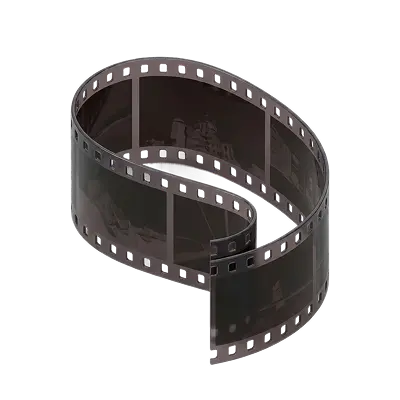
When Was the First Video Recorded? Exploring the Fascinating History of Video
The first video recording is generally credited to John Logie Baird, who demonstrated a mechanical television system capable of recording moving images onto a wax disc in 1927. Practical magnetic video recording came later, with Ampex introducing the first commercial videotape recorder in 1956. Consumer video recording didn't become widely accessible until the arrival of VHS and Betamax in the mid-1970s.

These days, we can capture videos from our smartphones and share them instantly, but have you ever wondered, “When was the first video recorded?” From the earliest moving images of the late 19th century to modern streaming, the history of film, video, and motion pictures is full of innovation and creativity.
In this article Capture explores the fascinating story of video technology, covering the first recorded moving images, the devices that made them possible, and the milestones that shaped how we watch and preserve memories today.
Jump to:
- When was the first video ever recorded?
- Origins of Video Recording
- Unveiling the First Video Recording
- Pioneers and Innovators
- Cultural and Technological Implications
- Future Trends in Video Recording
- The Lasting Impact of the First Video Recording
When was the first video ever recorded?
The first video ever recorded is widely considered to be the Roundhay Garden Scene from 1888, filmed by Louis Le Prince in Leeds, England. This two-second clip, recognized by the Guinness Book of World Records, shows people walking in a garden and is the oldest surviving motion picture film.
Some historians argue that the earlier Horse in Motion (1878) should be considered the first moving picture. Created by Eadweard Muybridge, it used a series of automatic photographs displayed in sequence to capture the gallop of a horse. While not continuous film, it marked the birth of chronophotography and demonstrated how still images could simulate motion.

Video recording has a history that stretches from the 1800s to today’s streaming.
These early breakthroughs soon inspired further innovation. By 1891, Thomas Edison and William Kennedy Dickson introduced the Kinetoscope, a device that used perforated film strips viewed through a peephole. Together, these milestones, the Horse in Motion, the Roundhay Garden Scene, and the Kinetoscope, represent the true beginnings of video recording as we know it today.
Here’s a timeline of the major milestones in video recording:

Origins of Video Recording
The origins of video recording trace back to the 1800s, when inventors created devices that produced the illusion of motion long before cameras and film as we know them. But first, it helps to understand what video is.
Video is an electronic medium for capturing, recording, copying, broadcasting, and displaying moving visual images. Unlike still photography, video involves a sequence of images shown in rapid succession, creating the effect of continuous motion. Around the same time, inventors were also experimenting with audio, leading to the first sound ever recorded in 1860 by Édouard-Léon Scott de Martinville using the phonautograph. These parallel innovations in sound and moving images would eventually merge, giving rise to films that combined both sight and sound.
Some of the earliest examples of motion simulation include:
- Early 1800s – Stroboscope: A spinning disc with rotating cogs that created the illusion of moving images.
- Mid-1800s – Flipbooks and stop motion: Simple methods that imitated motion using sequential images.
- 1861 – Coleman Sellers II’s kinetoscope: A device using stereoscopic pictures on glass plates to simulate objects in motion.
- 1870 – Henry Renno Heyl’s Phasmatrope: A rotating disk projecting 16 photographic images, shown to an audience with music.
These experiments, combined with the evolution of camera and photography, laid the foundation for the first true video recordings by the late 19th century.

Inventors in the 1800s laid the groundwork for video.
Pioneers and Innovators
After the first moving images, many pioneers shaped the evolution of video recording and viewing. Their inventions transformed video from simple experiments into the foundation of modern entertainment and home movies.
Key milestones include:
- 1895 – Lumière brothers: Screened the first commercial movie at the Grand Café in Paris using their Cinematographe projector, improving on Edison’s earlier technology.
- 1926 – John Logie Baird: Demonstrated the world’s first working television system.
- 1927 – The Jazz Singer: Released as the first feature-length film with synchronized dialogue, ending the silent film era.
- 1954 – First color TV: Television broadcasting expanded nationwide, though families still lacked affordable recording options.
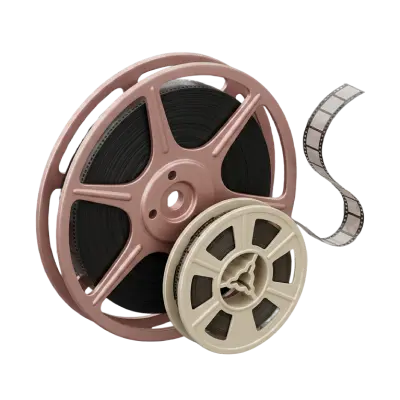
- 1965 – Super 8 film camera: Made home movie recording more accessible.
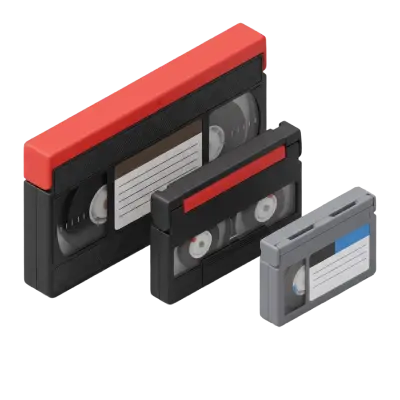
- 1976 – VHS and Betamax: JVC and Sony introduced videotape formats that allowed families to watch and record videos at home.
- 1980s – Camcorders and Digital8: Compact camcorders, Kodak’s Digital8, and Sony’s charge-coupled device technology improved image quality and portability.
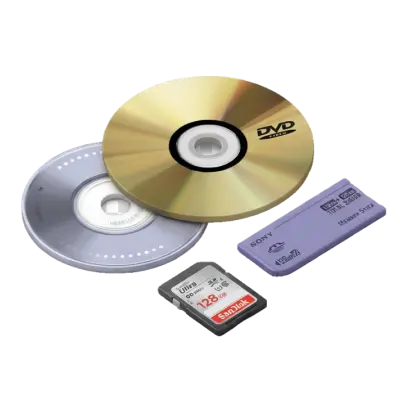
- 1997 – DVD and Netflix: The invention of DVDs and the founding of Netflix marked the digital video revolution, paving the way for streaming.
- 2000s – Smartphones: Camera phones evolved into smartphones like the iPhone, enabling anyone to record and share video instantly.
Today, billions of videos are recorded and viewed daily. Yet all of it can be traced back to the pioneers and innovators who shaped video history from the late 19th century onward.

The future of video includes VR, healthcare uses, and AI personalization.
Cultural and Technological Implications
The first video recording quickly led to video screenings. It seems like people always enjoyed sharing videos with others, but the influence of the first video recording device sent ripples throughout culture and entertainment.
Videos gave rise to motion pictures starting with early theatrical films and leading to all the movies that were released this year. It also contributed to television broadcasting and other TV shows that we’ve watched throughout the decades.
In fact, the invention of video recording likely influences our lives on a day-to-day basis. Whether we are using video streaming apps like Netflix or Amazon Prime, meeting using video calling applications like Zoom or Skype, watching television online or with traditional broadcasting methods, or capturing our most precious memories, we have the earliest video footage to thank.
Beyond entertainment, video recording became essential for surveillance, journalism, and documenting real-world events. These uses provide security, transparency, and reliable historical records that past generations never had.
Future Trends in Video Recording
The evolution of video technology shows no sign of slowing down. Video quality will likely continue to reach higher resolutions and more lifelike detail, while advances in VR and AR may bring fully immersive video experiences into everyday life.
Beyond entertainment, video recording trends are already shaping industries like healthcare and education. Surgeons use video for precision procedures, patient monitoring, and training, and future systems may integrate sensors to track temperature, heart rate, and other vital signs in real time.
Artificial intelligence is expected to play an even bigger role. Experts predict that AI will personalize video experiences, tailoring movies, games, or live events to individual viewers through facial recognition, eye tracking, and emotional responses.
While the exact path is uncertain, the future of video recording promises deeper realism, broader applications, and more personalization than ever before extending the innovation that began with the first moving images over a century ago.

The first video recorded in the 1800s began a journey that continues today.
The Lasting Impact of the First Video Recording
The first videos of the late 1800s may have only been a few seconds long and depicted seemingly ordinary moments, but those inventions marked the beginning of the history of video recording. From the earliest motion experiments to today’s streaming and AI-powered tools, every advancement builds on that original breakthrough.
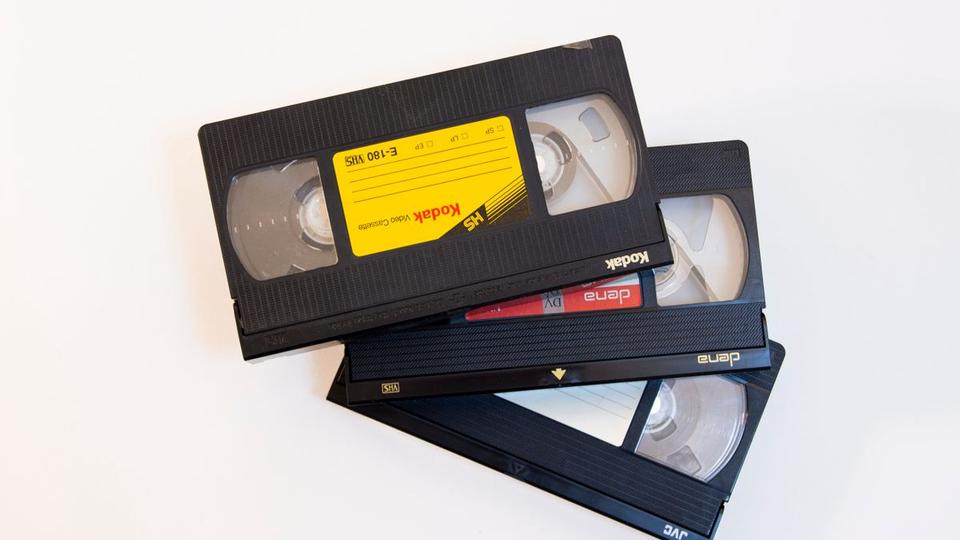
If you have old videos on VHS tapes, DVDs, or film reels, they are part of that same timeline of video history. By choosing to convert your home movies to digital, you can make sure those family moments are preserved with the same care that keeps the world’s earliest films alive. Capture helps transform fragile analog formats into high-quality digital copies so your family’s story continues for generations.
Bring your memories back to life.
You May Also Like
How AI Video Upscaling Works: De-interlacing, Noise Reduction, and Resolution Scaling Explained
AI video upscaling works in three stages: the original tape is captured using broadcast-grade equipment to extract the cleanest possible signal, encoded into a lossless ProRes master file, then processed frame-by-frame by neural networks that remove interlacing artifacts and increase the resolution to 1080p or 4K. Unlike a standard 1:1 transfer, the AI analyzes each frame individually — inferring missing detail from surrounding pixels and learned patterns — while preserving the original frame rate throughout.

Choosing the Perfect Film Video Camera: Top 10 Recommendations for Filmmakers
Film video cameras record motion by capturing a rapid sequence of still images on photographic film — typically at 24 frames per second for cinema and 16–18 fps for home formats like 8mm and Super 8. Unlike digital video, film requires chemical development before it can be viewed, and the footage degrades over time without proper cold, dry storage.

Five Super 8 Projectors That Stand the Test of Time
Super 8 projectors operate similarly to standard 8mm projectors but are not interchangeable — Super 8 film has a different sprocket hole size and frame dimension than regular 8mm. Kodak introduced Super 8 in 1965 alongside a cartridge-loading system that eliminated manual threading. Working Super 8 projectors are available used through eBay and estate sales, though lamp replacements are increasingly difficult to source.