What Does VHS Stand For? Understanding its Meaning, History, Technology, and Popularity
VHS stands for Video Home System, a name chosen by JVC to emphasize its intended use for everyday household recording and playback. JVC launched the format in Japan in 1976 and the United States in 1977, positioning it specifically as an affordable consumer alternative to professional video formats.

The VHS format was the go-to videotape format for home movies throughout the 1980s and 90s, but many people still don’t know what it means or how they work. Understanding the history of VHS tapes can help you determine the best option for your old VHS tapes and give you a new perspective on your nostalgic memories.
For over 20 years, Capture has been preserving millions of memories, but our archival experts also understand the importance of preserving old analog formats even as we continue to digitize them. That’s why we put together this guide to the VHS definition, history, technology, and more.
Keep reading to learn the answer to, “What does VHS stand for?” as well as how VHS advantages and technical features dominated the videotape wars, how to preserve VHS cassettes, and much more.
Jump To:
- What does VHS stand for?
- The Rise and Fall of VHS
- The Technical Side of VHS
- VHS in Popular Culture
- Preserving VHS: Archival and Restoration
- The World of VHS Collecting
- Conclusion
What does VHS stand for?

The VHS acronym stands for Video Home System because it was designed primarily for home entertainment whether that meant using a camcorder to record your own memories or watching Hollywood videos on a VCR.
This brings up another acronym, VCR, which stands for Video Cassette Recorder, one of the VTRs or video tape recorder types. This is because it could both record and playback VHS tapes and is the common turn for any VHS player. Additionally, there are some other VHS meanings to be aware of.
First, the original VHS abbreviation meant Vertical Helical Scan, which is a reference to the magnetic tape-recording system, but it was changed because for most people that meaning was useless. There are also multiple VHS tape cassettes including VHS-C, S-VHS, and S-VHS-C. If you are wondering “What does VHS mean”, then you might want to know what these extra letters stand for as well.
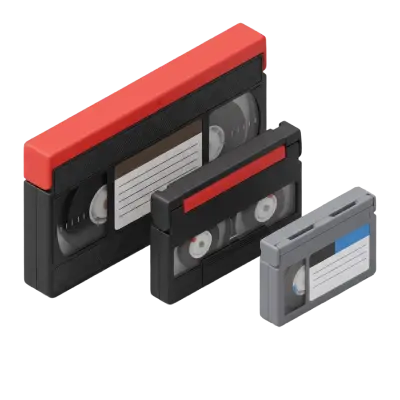
VHS-C are compact VHS tapes, which makes it easier to use them in a video. S-VHS tapes are “Super” VHS tapes, which are improved versions of VHS recorder tapes introduced by the Victor Company of Japan for better picture quality, luminance resolution, and bandwidth. S-VHS-C combined the Super and Compact versions.
Finally, you may also see NTSC and PAL associated with VHS technology. NTSC is the original American standard for broadcasting and stands for National Television System Committee. PAL has slightly fewer frames per second and stands for Phase Alternating Laine, generally used in countries outside of America.
The Rise and Fall of VHS

In the 1970s, JVC, or the Victory Company of Japan, released magnetic tape video tape recorders for home use. This new video format was called VHS, but they had competition including Betamax, developed by Sony. Later, they also had competition from LaserDisc, MiniDV, and other home video formats.
This led to what is known as the videotape wars, but VHS history shows that Beta tapes were no match for VHS video cassettes. This is because VHS focused on availability while Betamax focused on exclusivity and quality. While Betamax had higher picture quality, VHS offered longer recording time and could record complete TV shows and football games. Additionally, according to Wikipedia JVC made it easier for other brands like Panasonic and rental stores to adopt VHS as the most affordable video tape recorder format.
The result was VHS development that dominated the home video market, but digital video was coming fast. When DVD was introduced in 1996 and followed by Blu-Ray, it was clear that the VHS decline was imminent. Not only did DVDs eliminate the need for manual rewind and fast-forwarding, they also offered higher picture quality, more storage, and better durability.
Even though the DVD format eventually ended the VHS era, many families still have cassettes from the older video format lying around gathering dust. These VHS tapes contain priceless memories and home movies that deserve to be preserved for future generations.
The Technical Side of VHS

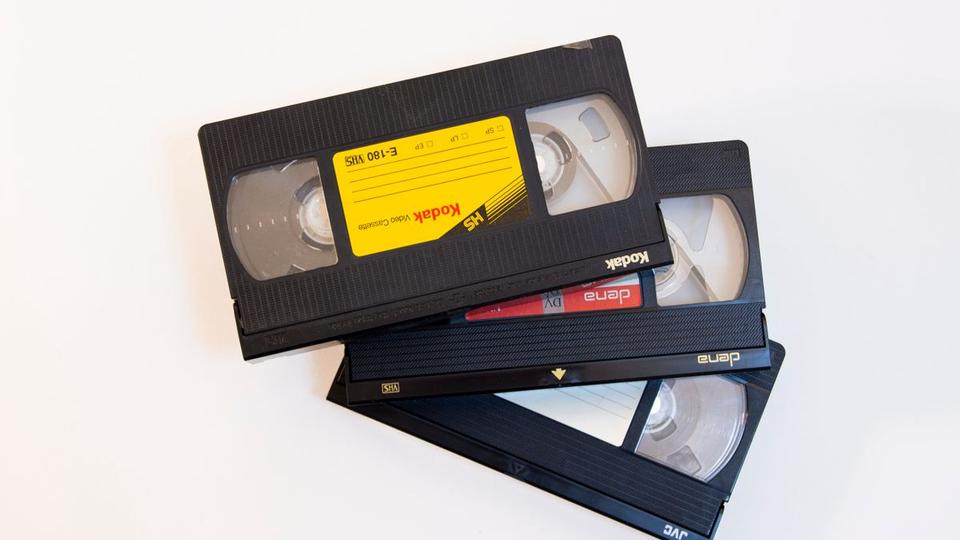
Now that you know about VHS origins, it’s a good idea to look at how VHS usage and technology work. Each cassette has two spools of magnetic tape. One is the supply reel while the other is the take up reel. Then, an exposed portion of the tape is stretched across for readability on a VCR system.
As the VCR pulls the supply reel around the high-speed rotating video head drum using pins and rollers, it reads and translates the signals into audio and visual content. To record, this process took place in reverse where the TV signal was decoded by the VCR tuner into audio and video. The electromagnetic signal is encoded onto the magnetic tape as it passes through the machine.
The VHS cassette itself measures 7.4 inches by 4 inches by 1 inch and offers a half-inch wide magnetic tape. They offer up to 6 hours of SP playback or 3 hours of normal playback. VHS tapes have a horizontal resolution of 240 lines and a vertical resolution of 486 lines for NTSC and 576 lines for PAL. Additionally, the VHS lifespan is 10 to 25 years because the magnetic signal deteriorates slowly over time.
VHS in Popular Culture

One of the main causes of prominent VHS nostalgia is the fact that VHS dominated pop culture for over a decade. Not only was it the most common type of format for Disney movies, feature films, and home video recording, but it was portrayed in some of our favorite movies and television shows from the 80s and 90s.
If you watch an old episode of your favorite TV shows from the 1990s and they use a camcorder, they are more than likely recording in VHS format. Plus, films like The Ring or V/H/S feature VHS tapes as a storytelling device.
Additionally, historic events from the time period were often captured on VHS tapes including presidential inaugurations to 9/11 attacks and more. VHS tapes are featured in MTV music videos, television shows, big name movies, and your own memories.
You may remember the two-cassette Titanic box, the trilogy Star Wars box set, and more. This nostalgic and massive pop culture influence has led to VHS collectors who cherish, sell, collect, and adore VHS movies.
Preserving VHS: Archival and Restoration

Your VHS video camera memories are one of a kind, but one of the main VHS disadvantages is the fact that they only last 10 to 25 years even without water, sun, or other damage. Because of this, your memories might be in danger of being lost forever, which is why it’s important to preserve them in digital format.
You can digitize your VHS tapes on your own if you have a VCR or camcorder to play them as well as a digital converter. While time consuming, this will transfer your VHS tapes onto a memory card or computer to ensure they are never lost.
Another option is to use Capture videotape transfer services. Our professionals will transfer your VHS tape memories into high-quality digital format and automatically integrate them into Google Photos. Plus, we’ll perform minor cleaning and cassette repair as necessary.
Our state-of-the-art tracking and security system also ensures your memories are always safe by tracking them through every hand and all the way back to you. We accept standard VHS tapes as well as VHS-C, S-VHS, S-VHS-C, and other videotape formats like Betamax.
After you digitize your memories, you can also use video editing software to enhance the quality, combine footage, and create precious heirlooms to pass down to children and grandchildren to preserve your legacy forever.
The World of VHS Collecting

VHS has become a prized possession for lots of collectors and enthusiasts. Some people collect them because they love to watch old movies that may not be available on DVD or streaming platforms like Netflix or Amazon Prime. Others like to collect rare VHS tapes in pristine condition.
In fact, some VHS tapes have sold for thousands of dollars like the Rocky Trilogy which sold for over $53,000 at auction or an unopened Back to the Future VHS which sold for $75,000. While most VHS tapes aren’t worth that much, collectors love the search, find, and process of collecting old nostalgic videos.
There are also online communities of VHS collectors like VHSCollector.com and Reddit’s subsection r/VHS. The market is always evolving and changing, but you might want to check your VHS collection to see if you have some rare tapes that might be worth something to someone!
Conclusion

With this VHS introduction blog, you know more than the answer to, “What does VHS stand for?” and can demonstrate your in-depth knowledge of VHS history, technology, collecting, and more. You also know that VHS tapes can be worth a lot of money, but the ones that contain your memories are truly priceless. That’s why it’s so important to preserve them as digital copies.
Capture offers affordable VHS digitization. If you want to learn more about our VHS transfer services, click here!
Bring your memories back to life.
You May Also Like
How AI Video Upscaling Works: De-interlacing, Noise Reduction, and Resolution Scaling Explained
AI video upscaling works in three stages: the original tape is captured using broadcast-grade equipment to extract the cleanest possible signal, encoded into a lossless ProRes master file, then processed frame-by-frame by neural networks that remove interlacing artifacts and increase the resolution to 1080p or 4K. Unlike a standard 1:1 transfer, the AI analyzes each frame individually — inferring missing detail from surrounding pixels and learned patterns — while preserving the original frame rate throughout.

Choosing the Perfect Film Video Camera: Top 10 Recommendations for Filmmakers
Film video cameras record motion by capturing a rapid sequence of still images on photographic film — typically at 24 frames per second for cinema and 16–18 fps for home formats like 8mm and Super 8. Unlike digital video, film requires chemical development before it can be viewed, and the footage degrades over time without proper cold, dry storage.

Five Super 8 Projectors That Stand the Test of Time
Super 8 projectors operate similarly to standard 8mm projectors but are not interchangeable — Super 8 film has a different sprocket hole size and frame dimension than regular 8mm. Kodak introduced Super 8 in 1965 alongside a cartridge-loading system that eliminated manual threading. Working Super 8 projectors are available used through eBay and estate sales, though lamp replacements are increasingly difficult to source.