10 Best 35mm Film Rolls for Every Type of Photography
Film rolls come in several formats — 35mm is the most common for consumer cameras, 120 medium format produces larger negatives with more detail, and 110 and APS cartridges were popular for compact cameras. The number on the box (24, 36) refers to exposures per roll, while ISO indicates light sensitivity, with higher numbers suited for low-light shooting.

Choosing the right 35mm film roll changes more than the brightness of your photos. Film stock affects color, contrast, grain, skin tones, low-light performance, and the overall character of every frame. For beginners, a forgiving ISO 200 or 400 color-negative film is usually easiest. Portrait photographers may prefer finer grain and softer skin tones, while street and night photographers often need faster film. Black-and-white and slide films offer entirely different looks.
Here are 10 of the best 35mm film rolls currently worth considering, from affordable everyday options to professional and experimental stocks.
Best 35mm Film Rolls at a Glance
Film roll | ISO | Type | Best for |
|---|---|---|---|
Kodak Gold 200 | 200 | Color negative | Beginners and everyday photos |
Kodak UltraMax 400 | 400 | Color negative | Best all-purpose film |
Kodak EKTACOLOR PRO 400 | 400 | Color negative | Portraits and professional work |
Kodak Ektar 100 | 100 | Color negative | Fine detail and vivid color |
CineStill 800T | 800 | Color negative | Night and artificial light |
Ilford HP5 Plus | 400 | B&W negative | Versatile black-and-white |
Kodak Tri-X 400 | 400 | B&W negative | Classic documentary look |
Ilford FP4 Plus | 125 | B&W negative | Fine-grain black-and-white |
Kodak Ektachrome E100 | 100 | Slide film | Transparency and vivid detail |
LomoChrome Purple | 100–400 | Color negative | Experimental color effects |
What Is a 35mm Film Roll?
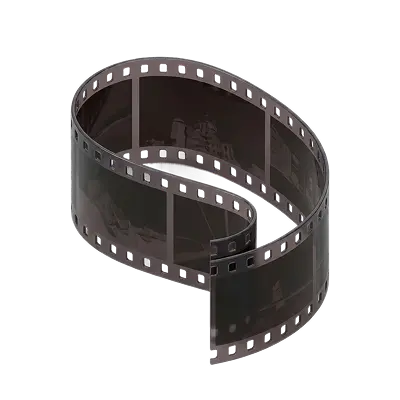
A 35mm film roll, also called 135 film, comes in a light-tight cartridge that fits compatible film cameras. Most consumer rolls contain 24 or 36 exposures.
The ISO number describes the film's sensitivity to light:
ISO 50–100: Fine grain and best for bright light
ISO 200: Good for daylight and general photography
ISO 400: Flexible enough for many lighting situations
ISO 800+: Better for lower light and faster shutter speeds
Film also comes as color negative, black-and-white negative, and positive or slide film. Unlike negatives, slide film creates a positive image that can be viewed directly after processing.
1. Kodak Gold 200: Best 35mm Film for Beginners
Kodak Gold 200 is an easy place to start if you are new to film photography.
It is a daylight-balanced color-negative film with fine grain, strong color saturation, and broad exposure latitude. ISO 200 works particularly well outdoors, on vacation, and for everyday family photography.
Best for: beginners, travel, daylight, family photos
Why choose it:
Affordable compared with professional film
Forgiving exposure latitude
Warm, recognizable Kodak color
Fine grain
Easy C-41 processing
If you have just bought an old 35mm camera and want to learn how it behaves, Gold 200 is a sensible first roll.
2. Kodak UltraMax 400: Best All-Purpose Film Roll
For greater flexibility, Kodak UltraMax 400 doubles the speed of Gold while remaining straightforward to shoot.
Its ISO 400 rating makes it useful in changing light, including overcast weather, shade, indoor spaces with good light, and moving subjects.
Colors are generally more saturated than professional portrait films, which suits vacations, street photography, parties, and everyday snapshots.
Best for: everyday photography, travel, changing light
Why choose it:
Flexible ISO 400 speed
Strong color saturation
C-41 processing
Good beginner option
Useful indoors and outdoors
3. Kodak EKTACOLOR PRO 400: Best for Portraits
Kodak expanded its professional still-film lineup in 2026 with EKTACOLOR PRO 160, 400, and 800. EKTACOLOR PRO 400 is the most versatile of the three.
It combines ISO 400 speed with fine grain, broad exposure latitude, and natural-looking skin tones. That makes it particularly useful when lighting changes throughout a portrait session, wedding, or travel shoot.
Best for: portraits, weddings, lifestyle, and professional photography
Why choose it:
Natural skin tones
Fine grain for ISO 400
Broad exposure latitude
Suitable for scanning
Flexible across lighting conditions
Photographers may still encounter Kodak Portra 400 at retailers as well, so compare current availability when buying professional 400-speed color film.
4. Kodak Ektar 100: Best for Fine Detail
Kodak Ektar 100 is designed for photographers who have enough light and want exceptionally fine grain, sharp detail, and vivid colors.
Its stronger saturation makes it particularly suited to landscapes, travel, architecture, products, and colorful outdoor scenes.
Best for: landscapes, travel, architecture, detailed scans
Why choose it:
ISO 100
Extremely fine grain
High sharpness
Vivid color
Excellent scanning potential
Because it is slower than ISO 400 film, Ektar performs best when you have plenty of daylight or can use a tripod.
5. CineStill 800T: Best Film for Night Photography
CineStill 800T creates one of the most recognizable looks in modern analog photography.
Unlike most daylight-balanced color films, it is balanced for tungsten light. That makes it particularly useful around artificial lighting, neon signs, city streets, restaurants, and nighttime environments.
Its characteristic red halation around bright light sources is part of the reason it has become popular for cinematic-looking photography.
Best for: nighttime streets, neon, concerts, artificial light
Why choose it:
ISO 800
Tungsten balanced
Works in low light
Distinctive halation
Standard C-41 processing
6. Ilford HP5 Plus: Best Versatile Black-and-White Film
For photographers trying black-and-white film for the first time, Ilford HP5 Plus is difficult to beat.
It is rated at ISO 400 and has wide exposure latitude, making it useful for street photography, travel, portraits, documentary work, and available-light photography.
It can also be push-processed to higher exposure indexes when additional sensitivity is needed.
Best for: street, documentary, travel, and beginner B&W photography
Why choose it:
Flexible ISO 400 speed
Classic grain structure
Wide exposure latitude
Push-processing flexibility
Available in 35mm and other formats
7. Kodak Tri-X 400: Best Classic Black-and-White Look
Kodak Tri-X 400 has been associated with documentary, photojournalism, and street photography for generations.
Compared with very fine-grain modern films, Tri-X has a stronger traditional black-and-white character. Its grain and contrast can become part of the photograph rather than something you try to eliminate.
Best for: documentary, street, portraits, and classic B&W aesthetics
Why choose it:
ISO 400 flexibility
Distinctive grain
Strong contrast
Long-established processing workflows
Excellent for expressive photography
8. Ilford FP4 Plus: Best Fine-Grain Black-and-White Film
If you prefer smoother black-and-white images, Ilford FP4 Plus is a slower ISO 125 film with fine grain and high sharpness.
It performs particularly well when plenty of light is available and is a strong choice for portraits, architecture, landscapes, products, and detailed subjects.
Best for: portraits, landscapes, architecture, and fine detail
Why choose it:
Fine grain
Excellent sharpness
ISO 125
Wide exposure tolerance
Smooth tonal range
9. Kodak Ektachrome E100: Best Slide Film
Kodak Ektachrome E100 is a color-reversal film, meaning processing creates a positive transparency rather than a traditional color negative.
At ISO 100, it offers fine grain, strong detail, and vivid color. Slide film generally has less exposure latitude than color-negative film, so accurate metering matters.
Best for: landscapes, travel, projection, and photographers who want transparencies
Why choose it:
Positive images after processing
Fine grain
Strong detail
ISO 100
E-6 processing
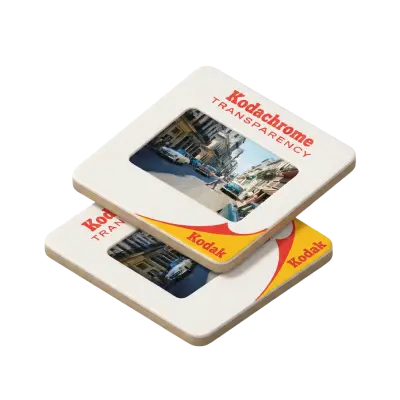
If you discover older transparencies in your family collection, professional slide and negative digitization makes them easier to view without a projector.
10. LomoChrome Purple: Best Experimental Film
Not every film needs to reproduce reality accurately.
LomoChrome Purple is a color-negative film designed to deliberately shift colors, turning greens and other natural tones into surreal purples, reds, and unusual hues.
Its flexible ISO range of approximately 100–400 also allows photographers to change the appearance by varying exposure.
Best for: experimental portraits, landscapes, and creative photography
Why choose it:
Dramatic color shifts
C-41 processing
ISO 100–400 flexibility
Available in 35mm
Results look different from conventional film
Which 35mm Film Should You Choose?
For your first roll, start with Kodak Gold 200 or UltraMax 400. They are forgiving, familiar, and easy to develop.
For portraits, EKTACOLOR PRO 400 offers professional-level flexibility and natural skin tones. Choose Ektar 100 when detail and vivid outdoor color matter more.
For black and white, HP5 Plus is the most versatile option, while FP4 Plus produces finer grain in good light. Tri-X 400 is better if you specifically want a classic documentary aesthetic.
CineStill 800T makes more sense after dark, while Ektachrome and LomoChrome are better choices when you want something visually different.
What Should You Do With Film After Shooting It?
Once a roll is finished, have it developed using the correct chemistry. Color-negative film normally uses C-41, slide film uses E-6, and black-and-white processing depends on the film and developer.
Keep the developed negatives rather than throwing them away after receiving scans. Properly stored negatives remain the original photographic source and can be rescanned in the future. Understanding how long photographic film lasts can also help you store exposed and developed film more safely.
Preserve the Photos After the Roll Is Developed
Choosing the film is only the beginning. Once those 24 or 36 exposures contain birthdays, vacations, portraits, or everyday moments, the negatives become part of your personal photo archive.
Capture helps families preserve analog photographs, including 35mm negatives, slides, and printed photos, as digital images that are easier to view, organize, share, and back up. Keeping both the original film and a digital copy gives those photographs the best chance of remaining accessible for years to come.
Bring your memories back to life.
You May Also Like
What Resolution Should You Scan Old Photos At?
Scan standard prints at 300–600 DPI, and scan slides or negatives at 2000–4000 DPI — negatives and slides need far more resolution because the original image is physically much smaller than a print. Choose the higher end of each range for archival copies or anything you might want to enlarge later.

Why Old Photos Turn Yellow (And How to Stop and Fix It)
Old photos turn yellow because the dyes and paper chemicals used to make them break down over decades — mainly through dye coupler instability, acid migration from old albums, and exposure to light, heat, and humidity. Photos from the 1970s and 80s are hit hardest because of less stable dye formulas and cheaper consumer paper. Most yellow casts can be corrected with color-corrected scanning; physical damage like tears or severe fading cannot.

TIFF vs. JPEG: What’s The Difference?
TIFF files are uncompressed and preserve full image detail, making them preferred for archiving and professional printing. JPEG uses lossy compression that permanently discards image data with each save. For digitized photos intended for long-term preservation, TIFF is the better archival choice while JPEG works well for sharing.