Unveiling the Truth: Do They Still Make VCRs or Are They a Thing of the Past?
No new VCRs have been manufactured since 2016, when Funai Electric produced the last units. Working used models are still available through eBay and thrift stores, typically priced between $30 and $200. Because heads wear out with use, most people with VHS tapes turn to professional digitization rather than tracking down working hardware.

If you want to watch VHS tapes that contain your home movies or the biggest movies from the 1980s and 90s, then you need a VCR. This begs the question, do they still make VCRs, or would you have to buy an old, pre-owned VCR? For over 20 years, Capture has been dedicated to ensuring you and your loved ones can view your most precious memories. Since many people have memories contained on videotapes as well as old VHS VCRs, we put together this guide on VCR systems to help you out. Keep reading to learn about the rise and fall of VCRs, how to still find a system to play home videos, tips for maintenance, and the value of VCR systems today.
Answer to the Question, “Do They Still Make VCRs?”
The short answer is no. No manufacturer still makes new VCRs, and the last VCR to be made was in 2016 by Funai Electric. Most makers stopped making videocassette recorders long before then.
That’s because VHS movies were mostly replaced by DVD, Blu-ray discs, and digital video streaming. These options offered higher picture quality than old VHS tapes. While you could still get a VCR/DVD combo or Blu-ray player for a while, making VHS recorders simply wasn’t profitable anymore because not many people continued to buy them.

VCRs are no longer made, but people still wonder about their availability and value.
The Rise and Fall of VCRs
The VHS tape was released by JVC in the late 70s and won the war with Sony Betamax tapes. By the mid-1980s, most families had a VCR system and numerous VHS tapes. With this came the rise in video stores and millions of VCR systems sold.
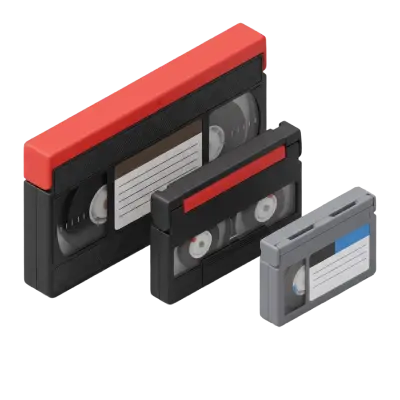
By 1987, 90% of the VCR market was based on the VHS format, with major manufacturers like Toshiba, Hitachi, JVC, and Matsushita producing VCRs. While there were Betamax VCRs, it was clear that VHS won the videotape war. Smaller options were released throughout the 80s and into the 90s, including VHS-C, MiniDV, and Hi-8. These options were easier to use with a handheld camcorder and offered additional VCR technology advancements.
Even though DVD was released in 1997, the prevalence of VCRs would continue to last. In fact, in 2005, 95 million Americans still owned VHS VCRs. However, this was the beginning of the downfall of VHS systems, and only a year later, in 2006, the last movie ever to be produced in VHS format was released, “A History of Violence.”
Then, a 2007 US FCC mandate stated that all new TV tuners would include ATSC and QAM support. This encouraged major electronics manufacturers to end production of standalone units, with VCR/DVD combo decks being made since then. This was a nail in the existing coffin for VCRs, much like the lack of television support killed the LaserDisc years before.
The fact was that the digital formats were not only cheaper but were higher quality, easier to make, worked on computers without complex adapters, and offered playback chapters instead of having to rewind or fast forward. That being said, you can still get VHS players today if you want to view your analog movies as they were originally intended to be viewed.
The End of VCR Production: From Peak Popularity to Obsolescence
Currently, no company makes VCRs, and there haven’t been any VCR manufacturing updates in a few years. In fact, if you want to know, “What is the VCR production status? “you’ll be hard-pressed to find any news because they simply aren’t made by anyone anymore. They aren’t even made with combo DVD players anymore.
1977: Panasonic began selling VCRs, helping launch the home video revolution.
2002: Sony discontinued its Betamax recorders, closing the book on VHS’s first competitor.
2006: Variety magazine ran what was essentially an obituary for the VHS tape format.
2012: Panasonic stopped making VCRs altogether.
2016: Funai Electric, a Japanese company that had acquired Magnavox’s video operations in 2013, became the last to shut down production after 33 years of manufacturing. At their peak, Funai sold about 15 million VCRs per year—but that number dropped to just 750,000 in 2015 before production ceased entirely.
Even though VCRs are no longer made, your tapes don’t have to fade away. Capture’s VHS conversion service makes it easy to preserve them in a digital format, so you can enjoy your memories without depending on outdated hardware.

The last VCR was produced in 2016, marking the end of an era for videotape players.
The Availability of VCRs
Finding a brand-new VCR for sale at Walmart or Best Buy is nearly impossible today, but you can still track down high-quality Hi-Fi VCR systems if you know where to look.
Online marketplaces: Used and refurbished models often show up on eBay or Amazon Marketplace. While you can find excellent systems there, it’s not always easy to confirm their condition before purchasing. Ask sellers about included accessories and whether features like recording still function.
Thrift stores and secondhand shops: This can be the best way to see a VCR in person. Look for clean connections, a working remote control, and extras such as DVD player capability, Dolby Hi-Fi Stereo, or HDMI connections that make the device easier to use with modern TVs.
No matter where you shop, consider image quality, sound quality, durability, brand reputation, availability of accessories, and overall price. Some VCRs deliver better performance for less, while others may be overpriced simply because they’re rare.
If you don’t want to buy a VCR, there are other options to view your VHS home movies. You can watch them on a camcorder if you have one. While this makes it hard to share them with others, it’s an option just to view videotapes again.
Another option is to convert old home movies to a digital format. This preserves them forever and makes it easier to view and share them over social media and email. Plus, you can simply store them in the cloud or on a hard drive. Capture offers high-quality videotape to digital services to preserve your precious memories for future generations.
How to Watch VHS Tapes Without a Working VCR
If you don't already own a VCR, here's how the realistic options compare before you decide.
Option | Cost | Effort | Output Quality | Notes |
|---|---|---|---|---|
Buy a used/refurbished VCR | $25–$300 | Medium (sourcing, testing condition) | Original tape quality, degrades further with each play | Best if you only need to watch a few tapes once |
Combo VCR/DVD player | $50–$150 (used) | Medium | Same as above, can burn to DVD while watching | Still relies on aging VCR mechanism |
USB VHS capture device (DIY digitizing) | $20–$80 for the device + your time | High (requires a working VCR anyway, plus editing/encoding time) | Variable, depends on original tape and capture device quality | Doesn't solve the "no VCR" problem — you still need one to feed into the device |
Professional conversion (Capture) | Service cost, no equipment purchase | Lowest (mail in, done) | Consistent, calibrated equipment, includes cleanup of playback artifacts | No hardware hunting, and tapes are preserved digitally going forward |
Tips for VCR Maintenance
If you own or buy a VCR, keeping it in good condition is essential, especially since new ones are no longer made. While professional VCR repair services exist, prevention is always easier than repair.
Common Threats to VCRs
A few major culprits can shorten your VCR’s lifespan:
Moisture – can cause corrosion and playback issues.
Dust – builds up inside and affects tape tracking.
Heat – overheats components and weakens belts.
Damaged tapes – poor-quality cassettes can shed debris and damage video heads.
Always store your VCR in a cool, dry place, and avoid leaving a tape inside when not in use.
Cleaning the Video Heads
One of the most common problems is dirty heads. To clean them:
Unplug the VCR and carefully remove the screws.
Use canned air to clear away dust.
Gently wipe the video heads with cotton or foam swabs dampened with isopropyl alcohol.
Reassemble and test playback.
If you’d rather not take apart the unit, a VHS head-cleaning cassette is another option - just insert and run it like a regular tape.
If you still have a problem, then you may have to seek help from a professional or buy replacement parts. However, you can also try lubricating the VCR if nothing else works. Add a drop of VCR lubricant oil to the tape guide after cleaning it with alcohol-soaked swabs.

Keeping your VCR clean and stored properly helps extend its lifespan.
The Value of Vintage VCRs
Since the answer to “Do they still make VCRs?” is no, these machines are only becoming rarer over time. Nostalgia for old analog formats, combined with limited supply, fuels interest in the vintage VCR market.
The value of VCRs in the 80s was tied to their role as cutting-edge technology. Families invested hundreds of dollars to bring home movie-watching and recording capabilities. Today, the story is different: while VCRs are nostalgic, they’re not especially expensive. You can often find reliable systems for as little as $25, and even the highest-quality models in 2025 typically sell for under $300.
Collectors usually favor older units with Dolby Sound and standard VHS capability. Others seek out combo VHS/DVD players or even CRT televisions with built-in VCRs, which provide a unique retro viewing experience.
If you’re curious about whether your VCR has value, the best way to find out is to:
Check recent listings on eBay or Amazon Marketplace.
Explore discussions on enthusiast communities such as Reddit’s r/VHS
or VideoKarma
Preserving Memories Beyond the VCR Era
The question “Do They Still Make VCRs?” comes up often, and the answer remains no. Still, the legacy of videotape lives on through collectors, nostalgic viewers, and families who want to revisit their home movies.
If you’re holding onto VHS or other videotapes, now is the time to preserve them. Capture makes it simple to digitize your recordings into modern formats like DVDs, USB drives, or secure cloud storage, so your memories never fade, even if VCRs have.
Bring your memories back to life.
You May Also Like
How AI Video Upscaling Works: De-interlacing, Noise Reduction, and Resolution Scaling Explained
AI video upscaling works in three stages: the original tape is captured using broadcast-grade equipment to extract the cleanest possible signal, encoded into a lossless ProRes master file, then processed frame-by-frame by neural networks that remove interlacing artifacts and increase the resolution to 1080p or 4K. Unlike a standard 1:1 transfer, the AI analyzes each frame individually — inferring missing detail from surrounding pixels and learned patterns — while preserving the original frame rate throughout.

Choosing the Perfect Film Video Camera: Top 10 Recommendations for Filmmakers
Film video cameras record motion by capturing a rapid sequence of still images on photographic film — typically at 24 frames per second for cinema and 16–18 fps for home formats like 8mm and Super 8. Unlike digital video, film requires chemical development before it can be viewed, and the footage degrades over time without proper cold, dry storage.

Five Super 8 Projectors That Stand the Test of Time
Super 8 projectors operate similarly to standard 8mm projectors but are not interchangeable — Super 8 film has a different sprocket hole size and frame dimension than regular 8mm. Kodak introduced Super 8 in 1965 alongside a cartridge-loading system that eliminated manual threading. Working Super 8 projectors are available used through eBay and estate sales, though lamp replacements are increasingly difficult to source.