Explore the 10 Best 8mm Video Players and Where to Find Them
8mm video tapes require a Sony-compatible 8mm or Hi8 camcorder for playback since standard VCRs cannot read the format. New players are no longer manufactured, and sourcing working used hardware is increasingly difficult. For most people, professional digitization is the more practical way to access footage on these tapes today.

Old 8mm tapes surface in attics, storage units, and boxes behind forgotten vintage camcorders. The tapes themselves are fine. The problem is finding something to play them on.
This guide covers everything you need: what each 8mm format is, how to actually play your tapes today, the best used players still worth buying, and what to do when working hardware simply cannot be found.
What Is an 8mm Video Tape?
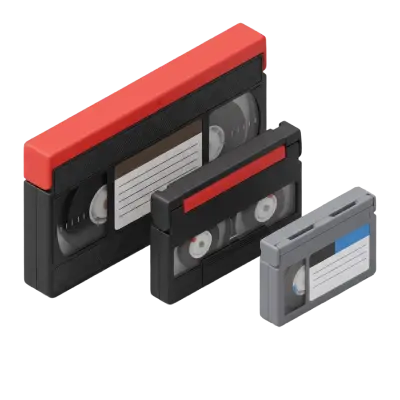
An 8mm videotape is a magnetic tape cassette format introduced by Sony in 1985. The "8mm" refers to the width of the tape inside — roughly a third the width of a standard VHS tape — which allowed cameras to shrink dramatically compared to the bulky VHS camcorders of the early 1980s.
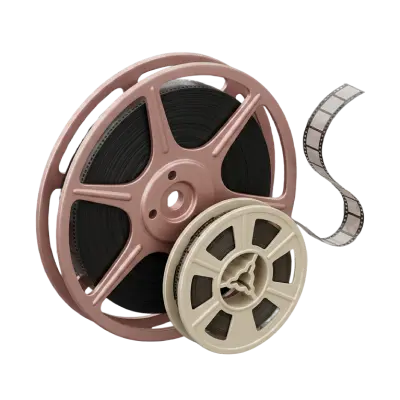
Important: 8mm videotape is not the same as 8mm film. If you have narrow reels on a spool (not in a cassette), that is 8mm film — a completely different medium used in movie cameras, not home video camcorders. This guide covers the cassette format only.
8mm video tapes were the dominant home video format from roughly 1985 to the mid-2000s. Families recorded birthdays, vacations, school plays, and family memories on them for nearly two decades. Hundreds of millions of tapes were made.
Video8, Hi8, and Digital8: Which Format Do You Have?
Before buying a player, you need to know which of the three 8mm formats your tapes are. They are physically identical in size but electronically incompatible in important ways.
Format | Introduced | Video Quality | Compatible Players | How to Identify |
Video8 | 1985 | 240 lines (VHS-equivalent) | Any 8mm or Hi8 player | Usually labeled "Video8" or just "8mm" on the cassette |
Hi8 | 1989 | 400 lines (near-S-VHS quality) | Hi8 or Digital8 players only | Labeled "Hi8" on cassette — often with a metallic shell |
Digital8 | 1999 | 500+ lines (DV quality on analog tape) | Digital8 camcorders only | Labeled "Digital8" — less common, Sony-only format |
Key rule: A Hi8 player plays both Hi8 and Video8. A Video8-only player cannot play Hi8 tapes. A Digital8 camcorder plays all three. When in doubt, buy a Hi8 or Digital8 device — it covers the most formats.
If your tapes are Hi8, the Hi8 tape players guide covers the best available options specifically for that format.
Factors to Consider When Choosing an 8mm Video Tape Player
When looking at 8mm video player options, you should consider the compatibility with your specific cassette tapes, the playback quality and resolution, additional features, price, and durability.
Compatibility
Make sure you check which type of 8mm tapes are played by each of the 8mm VCRs you consider. Not all types will play the specific tape format you have. In general, different types of 8mm video tape players will play a single 8mm format. However, many are also backward compatible, meaning some Hi8 tape players will play Video8, and Digital8 players could play all three formats.
Playback Quality and Resolution
Nobody wants blurry, out-of-focus, or discolored family memories, which is why it’s important to consider the playback quality. Check out other people’s experiences, VCR specifications, and the condition of the specific 8mm video player to determine the expected quality.
Additional features
Some top-rated 8mm players offer additional features that you might want when watching your home movies. Common features include HiFi stereo, auto tuner, portable design with built-in LCD screen, and editing capabilities like colour enhancement.
Price Range
Some 8mm video cassette players are harder to find, in better condition, or of higher quality, and the price will reflect that. However, some may be overpriced for no clear reason as well, so just make sure you check the price in relation to the condition and features.
Durability and Condition
Vintage 8mm players are old, which means it’s a good idea to get one that’s durable by a reliable maker like Sony or JVC. Additionally, make sure you check the condition because some 8mm VCRs for sale online are in non-working condition or require lots of repairs.
Top 10 Best 8mm Video Players Available Today
All of the models below are discontinued and are only available used. Prices are approximate eBay market rates as of mid-2026. Condition varies — always check seller ratings and ask about old video camera inspection history before purchasing
1. Sony EV-C2000E 8mm Video Cassette Recorder
The most commonly recommended entry point for 8mm playback. Plays both Hi8 and Video8, offers Hi-Fi stereo audio, and connects via RCA or S-Video. Its straightforward design means fewer components that can fail.
Price range: $100–$150 on eBay | Format: Hi8 + Video8 | Connection: RCA + S-Video
Pros: Widely available, good Hi-Fi sound, reliable build.
Cons: No additional features, older than most units on this list.
2. Sony EV-C500E 8mm Video Cassette Recorder
A step up from the C2000E with a built-in editing suite — synchro-edit, insert edit, and audio dubbing capabilities make it popular with anyone who wants to do more than just watch their tapes.
Price range: $100–$200 | Format: Hi8 + Video8 | Connection: RCA + S-Video
Pros: Advanced editing features, good build quality.
Cons: More complex than needed for basic playback, some units have worn editing mechanisms.
3. Sony EV-S550E 8mm Video Cassette Recorder
Mid-tier Sony deck with enhanced TBC (time-base corrector) for smoother playback and reduced tape jitter — useful if your tapes show signs of age-related dropouts. Compatible with S-VHS tapes via S-Video output only (does not play S-VHS — uses S-Video for output).
Price range: $120–$200 | Format: Hi8 + Video8 | Connection: RCA + S-Video
Pros: TBC circuit improves aged tape playback, good signal output.
Cons: Harder to find in working condition.
4. Sony EV-S9000E Hi8 Video Cassette Recorder
The top-tier Sony Hi8 deck. Dual-speed playback, superior TBC, and the best picture quality of any analog 8mm VCR. Used by professional transfer facilities. If you have Hi8 tapes and want the best possible output, this is the unit.
Price range: $200–$400 | Format: Hi8 + Video8 | Connection: RCA + S-Video + component
Pros: Best picture quality of any 8mm deck, professional-grade TBC, durable build.
Cons: Expensive, scarce, requires technical knowledge to verify condition.
5. Sony EV-C3 Compact Video 8 VCR
A smaller, lightweight unit designed for portability. Plays Video8 only (not Hi8). Good for people who only need to access older Video8 recordings and want a compact setup.
Price range: $60–$120 | Format: Video8 only | Connection: RCA
Pros: Compact, simple, easy to set up.
Cons: Video8 only — cannot play Hi8. Older than most EV-series decks.
6. Sony GV-D800 Hi8 Video Walkman
A portable Hi8 Walkman — battery-powered with a built-in 4" LCD screen for direct viewing without a TV. One of the few 8mm devices that works as a completely self-contained player. Popular for events where you want to show footage without a full AV setup.
Price range: $150–$300 | Format: Hi8 + Video8 | Connection: RCA out + built-in LCD
Pros: Completely self-contained, battery or AC, built-in screen.
Cons: Small screen limits group viewing, LCD hinges can break with age.
7. Samsung SCL700 Hi-8 Camcorder
A camcorder option rather than a dedicated deck. The SCL700 supports both PAL and NTSC formats — useful for international tapes. Can be used as a player by connecting its AV-out to a TV. Like other camcorders used as players, it works well for occasional use, but puts mechanical wear on the device each time. Samsung's 8mm camcorders appear less often than Sony units on how to play Hi8 tapes forums, but are generally reliable.
Price range: $50–$100 | Format: Hi8 + Video8 | Connection: RCA AV out
Pros: PAL/NTSC compatible, decent price.
Cons: Camcorder mechanics, charging port issues common on older units.
8. Canon ES8400V Hi8 Camcorder
Canon's Hi8 camcorder with a built-in 2.5" LCD screen, video effects, and optical zoom. Good picture quality. Used as a player by connecting to a TV via AV cable. Sound quality is a known weakness — if audio is important to your tapes, test before buying.
Price range: $60–$130 | Format: Hi8 + Video8 | Connection: RCA AV out
Pros: LCD screen, video effects, good image quality.
Cons: Below-average audio, hard to find in good condition.
9. Goldstar GVR-DD1 8mm and VHS VCR
The only unit on this list that plays both 8mm tapes AND standard VHS — useful if you have both formats in a box. It can also convert between them (dub 8mm to VHS or vice versa). For households with mixed tape collections, how to watch VHS-C tapes and 8mm tapes alike, this is the most versatile option.
Price range: $80–$150 | Format: 8mm + VHS | Connection: RCA
Pros: Dual-format playback, format conversion capability.
Cons: Less durable than Sony decks, harder to find in working condition.
10. Sharp Hi8 Viewcam
The Sharp Viewcam series is distinctive: a large rear LCD panel replaces the traditional viewfinder. Hi8 and Video8 compatible. Used as a player via AV output. The large screen (for its era) made it practical for sharing footage directly from the camera.
Price range: $50–$120 | Format: Hi8 + Video8 | Connection: RCA AV out
Pros: Unique large-screen design, Hi8 and Video8 compatible.
Cons: LCD panels yellow/fade with age, proprietary battery packs are hard to find.
Where to Buy an 8mm Video Tape Player
New 8mm players are not manufactured. Your options are all in the used/refurbished market:
eBay — The largest selection. Search by specific model name (e.g., "Sony EV-S9000E") rather than generic terms. Filter by "sold listings" to see realistic prices. Prioritize sellers who test and describe the unit's condition in detail.
Porter Electronics and VCRShop.com — Specialty used electronics dealers who sometimes professionally service units before sale. Higher price, lower risk than individual eBay sellers.
Local pawn shops and estate sales — Occasionally surface working units at low prices. Condition is often unknown; best for buyers who can test on-site.
Craigslist / Facebook Marketplace — Local pickup means you can test before buying. Lower prices than eBay, but a much smaller selection.
What to look for: Confirm the seller has tested playback (not just power-on). Ask about head cleaning history. Units that have sat unused for years often have sticky tape path components — a common failure mode that requires professional cleaning before reliable playback.
What to Do If You Can't Find a Working 8mm Player
The market for 8mm hardware shrinks every year. Many tapes in boxes today belong to people who have already tried and failed to source a working player. If that's your situation, the best company to digitize home movies route is now more practical than the hardware route for most households.
Capture accepts Video8, Hi8, and Digital8 tapes — along with VHS, VHS-C, Betamax, and other formats if your collection is mixed. You ship the tapes in a prepaid box, and Capture handles the rest: professional-grade playback equipment, digital encoding, quality check, and delivery of both your original tapes and digital files.
If your tapes contain footage of events that only exist on those tapes — graduations, first steps, weddings — waiting for "the right player" is a real risk. Magnetic tape degrades every year. Digitizing video 8 tapes creates a permanent copy regardless of what happens to the physical tape afterward.
Bring your memories back to life.
You May Also Like
How AI Video Upscaling Works: De-interlacing, Noise Reduction, and Resolution Scaling Explained
AI video upscaling works in three stages: the original tape is captured using broadcast-grade equipment to extract the cleanest possible signal, encoded into a lossless ProRes master file, then processed frame-by-frame by neural networks that remove interlacing artifacts and increase the resolution to 1080p or 4K. Unlike a standard 1:1 transfer, the AI analyzes each frame individually — inferring missing detail from surrounding pixels and learned patterns — while preserving the original frame rate throughout.

Choosing the Perfect Film Video Camera: Top 10 Recommendations for Filmmakers
Film video cameras record motion by capturing a rapid sequence of still images on photographic film — typically at 24 frames per second for cinema and 16–18 fps for home formats like 8mm and Super 8. Unlike digital video, film requires chemical development before it can be viewed, and the footage degrades over time without proper cold, dry storage.

Five Super 8 Projectors That Stand the Test of Time
Super 8 projectors operate similarly to standard 8mm projectors but are not interchangeable — Super 8 film has a different sprocket hole size and frame dimension than regular 8mm. Kodak introduced Super 8 in 1965 alongside a cartridge-loading system that eliminated manual threading. Working Super 8 projectors are available used through eBay and estate sales, though lamp replacements are increasingly difficult to source.